rural food systems

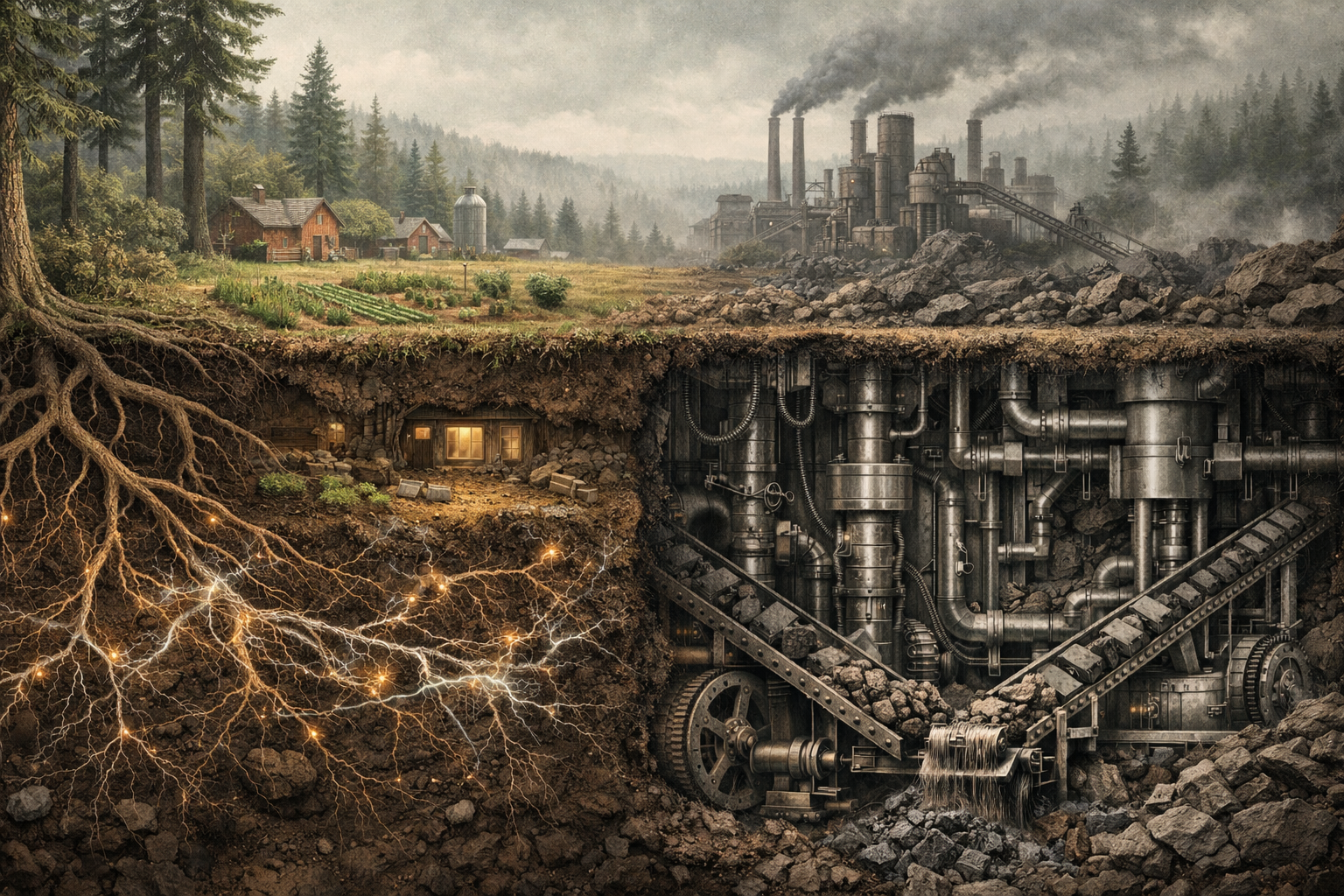
Wide editorial illustration of a Pacific Northwest forest and farmland shown in cross section, with an underground mycorrhizal network glowing through dark soil and connecting tree roots, small farms, and rural homes on one side, contrasted with a cold industrial extraction system of steel pipes, gears, and conveyors pulling resources upward toward distant factories, under misty Oregon forest light in muted earth tones.
General Knowledge, Local Business Collective

Mycelium vs. The Machine: Why Our Food System Keeps Breaking

Our food system keeps breaking not because people stopped caring, but because it’s built like a brittle machine: centralized and fragile. Mycelium shows a better way. This underground fungal network connects plants across vast distances, sharing nutrients and signals without a central boss. When one path fails, it reroutes. No collapse, just adaptation. Southern Oregon could build the same resilience with decentralized hubs, redundant pathways, and local value circulation that regenerates instead of leaks.

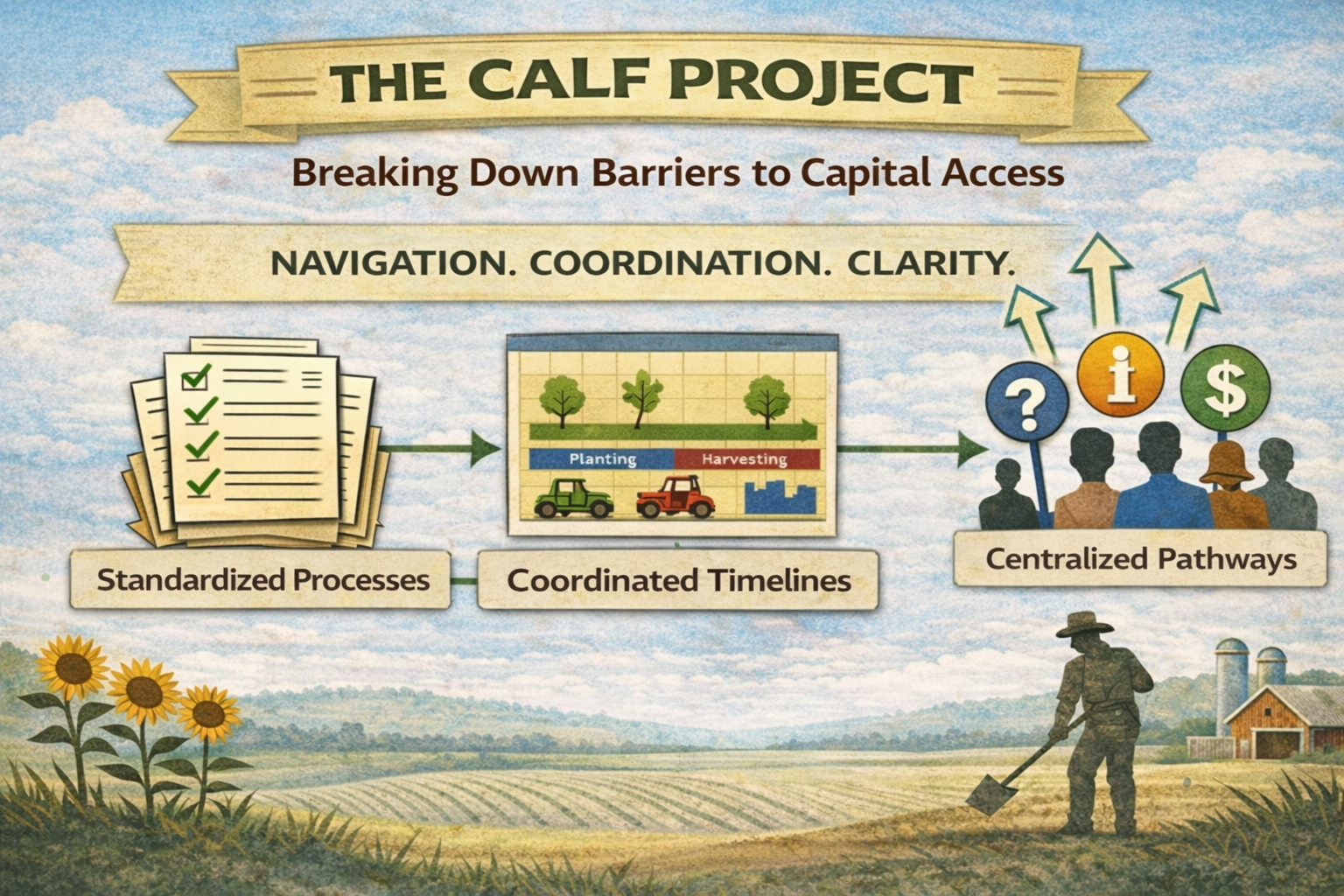
Illustrated infographic titled “The CALF Project – Breaking Down Barriers to Capital Access,” showing how navigation, coordination, and clarity affect farmer access to funding. The image depicts three connected system elements: standardized processes represented by stacked checklists, coordinated timelines shown through a planting and harvesting calendar, and centralized pathways illustrated by grouped people with information and funding icons. These elements point toward a farmer working in a field, emphasizing how shared infrastructure reduces administrative burden, aligns support with seasonal realities, and improves equitable access to capital for small and diversified farms. | Rogue Media Solutions
General Knowledge

Southern Oregon Farmers Are Not the Problem. The System Is.

Small farms across Southern Oregon are not failing due to lack of effort or creativity. Research shows the real barriers are structural: fragmented funding pathways, misaligned timelines, and systems built for scales that do not reflect how local producers actually operate. This article examines what the data reveals, why coordination matters, and what collective approaches could realistically strengthen the region’s food system.

Scroll to Top